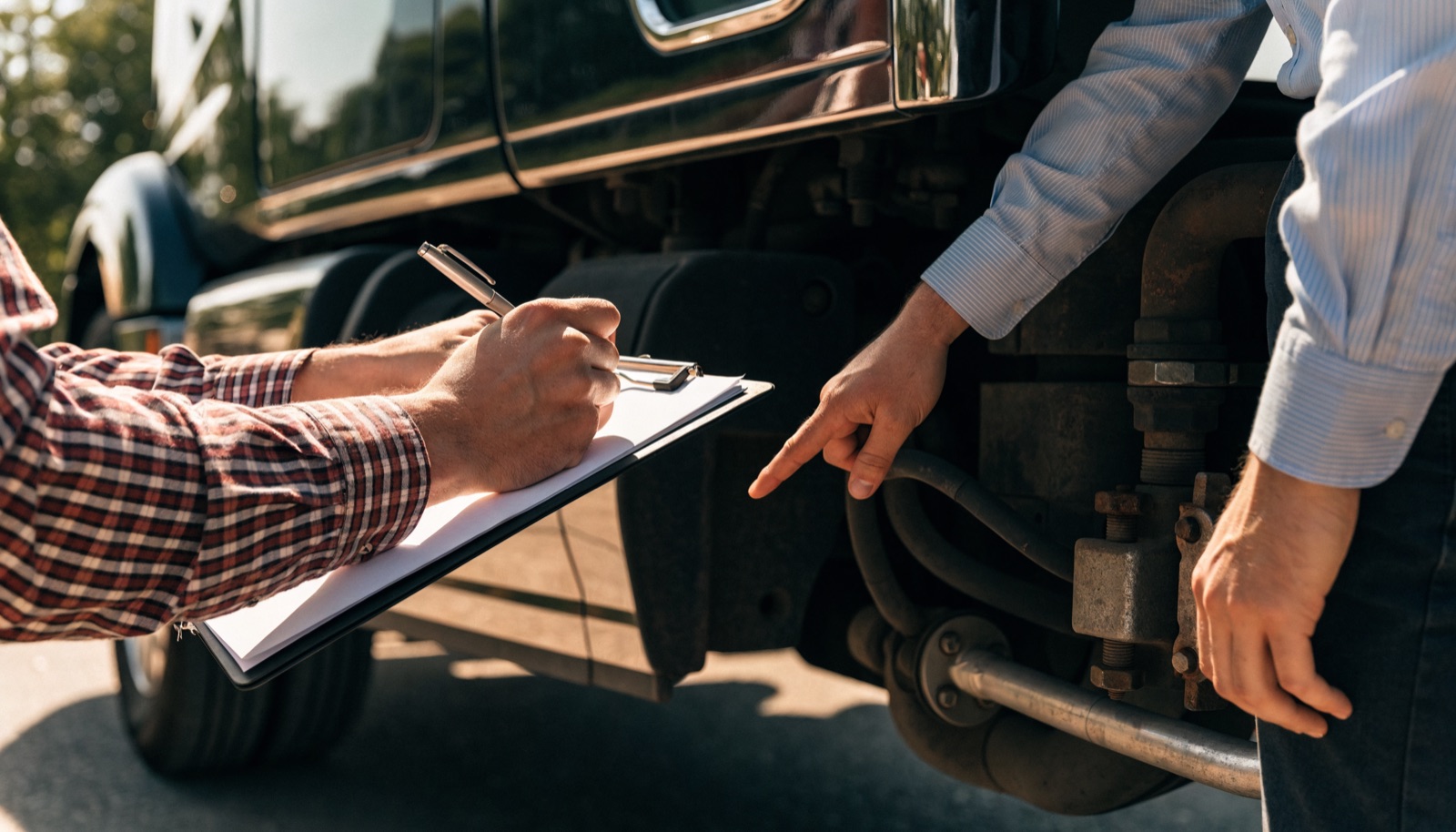
Who is liable in a truck accident is rarely a one-name answer. Depending on what caused the crash, liability can fall on the driver, the trucking company, the truck’s owner, a maintenance contractor, the company that loaded the cargo, a parts manufacturer, or occasionally a government agency responsible for the road. A car wreck usually has one at-fault driver. A commercial truck wreck can have several defendants at once, each carrying their own insurance policy.
That difference matters. It changes how much money is available for your injuries, and how hard the other side will fight to avoid being named. Below, our 18-wheeler accident lawyers walk through every party that can share the blame, why more defendants usually means more available coverage, and what happens to your claim if you were partly at fault yourself.
Why Truck Accident Liability Looks Different From a Car Wreck
A fully loaded 18-wheeler can weigh up to 80,000 pounds under federal weight limits, compared to roughly 3,500 to 4,500 pounds for a typical passenger car. That size difference is why the damage from a truck crash tends to be so severe, and it’s also a clue to why the legal picture is more complicated.
A passenger car is usually owned and driven by the same person. A commercial truck is part of a business operation. The driver may be an employee or an independent contractor. The truck may belong to the motor carrier or be leased from a separate owner. The trailer might belong to yet another company, and the cargo inside it might have been loaded by someone who never touched the truck at all. Each relationship can create a separate legal duty, and a separate defendant.
That’s the real answer to who is responsible for a truck accident: it depends on which duty got broken, and by whom.
Who Is Liable in a Truck Accident: The Driver and the Motor Carrier First
The Truck Driver
The driver is usually the first party to look at, and often the easiest to understand. Ordinary negligence claims apply here just like they would in a car accident: speeding, following too closely, distracted driving, or driving under the influence.
Commercial drivers also answer to federal hours-of-service rules private drivers don’t. Those rules cap driving time at 11 hours after 10 consecutive hours off duty, limit the on-duty window to 14 hours, require a 30-minute break after 8 cumulative hours of driving, and cap total hours over a 7- or 8-day period. A driver who blows through those limits to make a delivery window isn’t just breaking a rule. That violation can become direct evidence of negligence. Our page on truck driver fatigue and hours-of-service violations goes deeper into how these rules get broken.
The Motor Carrier (The Trucking Company)
In most truck accident cases, the trucking company is the real target, for two reasons.
First, under respondeat superior, a rule of Texas common law, an employer is liable for an employee’s negligence committed in the course and scope of employment. If the driver was on the clock and following a dispatched route, the company is often on the hook.
Second, carriers can be independently negligent, separate from anything the driver did. That includes:
- Negligent hiring: putting a driver with a poor safety record or insufficient training behind the wheel.
- Negligent training or supervision: failing to properly train a driver, or ignoring warning signs of unsafe behavior.
- Pressure to break hours-of-service rules: dispatchers or schedules that push drivers to skip required rest, whether or not the company admits it in writing.
This is why carriers fight so hard to keep liability focused narrowly on the driver alone. Once a company’s own hiring file, training records, or dispatch pressure enters the conversation, the case is no longer about one person’s mistake. It’s about how the business operates.
Other Parties Who Can Share the Blame
The driver and the carrier aren’t always the whole story. Depending on the facts, any of the following can also be named.
The Truck or Trailer Owner, If Different From the Carrier
Trucking companies frequently lease equipment rather than own it. If the truck or trailer in your crash belonged to a separate leasing company, that owner may carry its own liability policy, and its own exposure around how the equipment was maintained or insured.
Maintenance and Repair Contractors
Brakes, tires, and trailer hitches are maintained on a schedule for a reason. When a third-party maintenance shop skips an inspection, misses a known defect, or performs a repair improperly, that contractor can be liable if the failure it should have caught contributed to the crash.
Cargo Shippers and Loaders
An improperly secured or overloaded trailer can shift weight mid-drive, causing a rollover or jackknife that has nothing to do with how carefully the driver was operating the truck. When the company that loaded the cargo, often separate from the trucking company, skipped proper loading and securement standards, that company can share liability.
Parts Manufacturers
Sometimes the failure starts with the equipment itself. A defective tire, a faulty brake component, or a coupling system that fails under normal use can point to a product defect claim against the part’s manufacturer, separate from any claim against the driver or carrier.
Government Entities
This one is rare, but it happens. If a poorly designed intersection, an unmarked hazard, or a road in disrepair contributed to the crash, a government entity responsible for that road may bear some responsibility. These claims carry their own strict notice deadlines and procedural rules, so they need to be evaluated quickly.
Why Multiple Defendants Matter: More Insurance, More Fight
Identifying every liable party isn’t just an academic exercise. It directly affects how much compensation is realistically available to you.
Most interstate freight carriers are federally required to carry at least $750,000 in liability insurance under 49 CFR § 387.9, with higher minimums for hazardous materials haulers. That number is a floor, not a ceiling. Many carriers carry more, and umbrella or excess policies are common. When a maintenance contractor, a separate truck owner, or a parts manufacturer is also involved, each typically carries its own separate policy. More potential defendants generally means more total coverage available for medical bills, lost income, and other losses.
That’s also why carriers fight so hard over fault. Every dollar assigned to the truck side is a dollar their policy has to pay. It’s common for a carrier’s insurer to move fast after a crash: sending an adjuster, requesting a statement, even offering a quick settlement, before you’ve seen the full picture of who was responsible. Our guide on truck accident compensation in Texas covers what these claims are typically worth to pursue.
Texas Proportionate Responsibility: Being Partly at Fault Doesn’t Kill Your Claim
Trucking companies and their insurers also know that shifting even a small percentage of blame onto you can reduce what they owe. Texas follows a modified comparative fault rule, sometimes called proportionate responsibility, under Chapter 33 of the Texas Civil Practice and Remedies Code.
Here’s how it actually works: if you’re found partly at fault for the crash, your recovery is reduced by your percentage of fault. Say you’re found 20% responsible and your damages total a certain amount, your recovery would be reduced by that 20%. But if you’re found more than 50% at fault, Texas law bars recovery entirely. That 51% line is the one that matters most, and it’s exactly where insurance adjusters try to push blame in a disputed truck crash.
Being told you were “partly at fault” isn’t the end of your case. It’s a fault percentage that has to be proven with evidence, and that percentage is very often overstated by the side trying to avoid paying a larger claim.
The Evidence That Pins Down Liability
Because so many parties can be involved, truck accident cases are won or lost on evidence that a typical car accident case never touches. The most important sources include:
- Electronic logging device (ELD) data: federally required for most commercial drivers, ELDs create a time-stamped record of driving hours that can confirm or contradict a hours-of-service violation.
- The driver qualification file: a carrier’s own records on hiring, licensing, training, and prior violations.
- Maintenance and inspection records: showing whether known issues were addressed or ignored.
- The truck’s “black box” (event data recorder): capturing speed, braking, and other data in the moments before impact.
Much of this evidence is controlled by the trucking company, and federal rules only require carriers to keep ELD records of duty status and supporting documents for six months. After that, or sooner if a carrier’s own systems cycle out older data, it can be gone unless a formal preservation (spoliation) letter is sent early.
That’s one of the biggest practical differences between a truck claim and an ordinary car accident claim, and it’s why the steps in our guide on what to do after a truck accident in Texas matter from day one. In crashes involving a death, our wrongful death attorneys can explain how these same liability questions apply under the Texas Wrongful Death Act.
If you’re still working through what to do right after a crash, our overview of a truck accident lawsuit in Texas walks through the filing deadlines and process from the beginning.