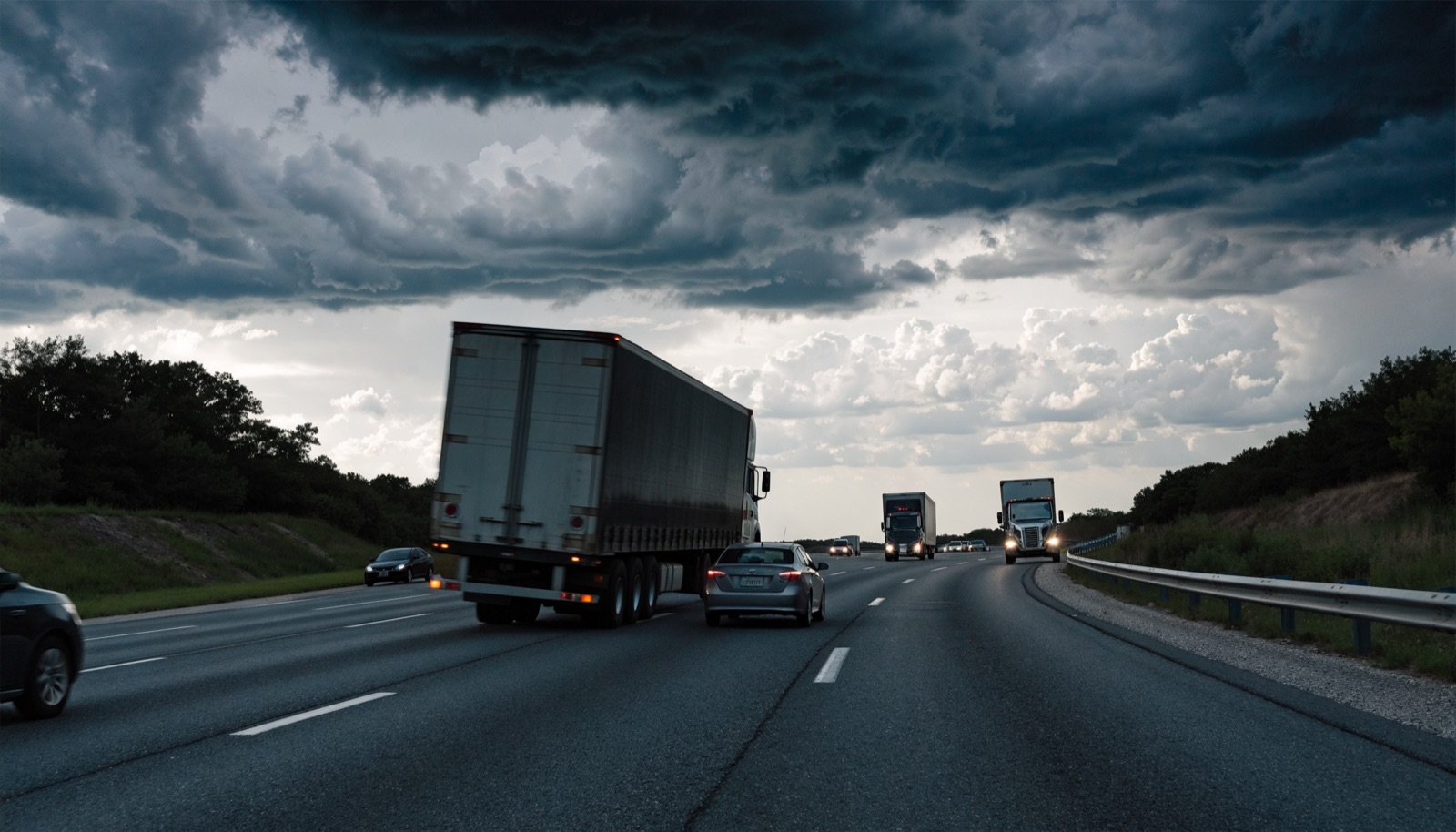
Types of 18-wheeler accidents in Texas generally fall into a handful of recognizable patterns: jackknife, rollover, underride, rear-end, wide-turn, blind-spot, tire blowout, lost-load, and head-on collisions. Each pattern points investigators toward a different cause, and often a different party who may be liable.
A crash with an 18-wheeler accident lawyer on your side starts by figuring out exactly which of these you’re dealing with, because the physics, the paperwork, and the parties involved change from one type to the next. Knowing the type of crash you were in is usually the first step toward knowing who is responsible for it.
The Main Types of 18-Wheeler Accidents in Texas
Every crash involving a commercial truck gets filed under a type, and that type isn’t just a label. It’s a roadmap to what happened and why. Insurance adjusters, police reports, and eventually a jury all rely on the same basic categories to sort out fault.
The starting point for all of it is weight. A fully loaded 18-wheeler can weigh up to 80,000 pounds under federal limits, next to roughly 3,500–4,500 pounds for a typical car. That disparity is why the “type” of truck accident matters so much for injury severity.
A rear-end collision at moderate speed can be survivable in a car-on-car crash and catastrophic when the vehicle behind is a fully loaded semi. Below are the patterns that appear most often in Texas truck-crash litigation. For the bigger picture on what to do after any of these crashes, see our 18-wheeler accident guide.
Jackknife Accidents
A jackknife happens when a tractor-trailer’s trailer swings out and folds against the cab, forming a shape like a pocketknife blade snapping closed. It’s usually triggered by hard or sudden braking, especially on wet pavement, downhill grades, or when a trailer is empty or unevenly loaded. Because a jackknifing truck can span multiple lanes almost instantly, it frequently pulls in several vehicles at once.
Jackknife crashes raise their own specific liability questions: braking technique, trailer loading, speed for conditions, and maintenance of the trailer’s braking and coupling systems. We cover the mechanics and the liability picture for this crash type in detail in our guide to jackknife 18-wheeler accidents in Texas.
Rollover and Wide-Turn Accidents
Rollover Accidents
A rollover occurs when a truck tips onto its side or roof, often during a sharp turn, an evasive maneuver, or when a truck is carrying a high or unbalanced load. Trucks sit higher off the ground than passenger vehicles and carry their weight up top, which makes them more prone to tipping than a car would be in the same situation. Speed for the curve, tire condition, load distribution, and driver training all become relevant once a rollover is under investigation.
Wide-Turn (“Squeeze Play”) Accidents
Because a semi-truck needs extra room to complete a right turn, drivers are trained to swing left before turning right. When a driver skips that step, or a passenger vehicle tries to slip into the gap on the truck’s right side, the result is a “squeeze play” collision, where the trailer’s rear wheels track into a lane or shoulder a car is occupying. These crashes often turn on whether the truck driver checked mirrors and signaled properly, and whether the car driver could have reasonably anticipated the truck’s wide swing.
Underride, Override, and Rear-End Collisions
Underride and Override Crashes
An underride accident happens when a smaller vehicle slides underneath the back or side of a trailer, frequently in low-visibility conditions or when a truck is stopped or moving slowly on the roadway. An override crash is the reverse: the truck itself climbs up and over the smaller vehicle, most often in a rear-end scenario where the truck’s height and momentum carry it forward.
Both patterns are especially dangerous because of that 80,000-pound-versus-4,000-pound weight gap, the smaller vehicle’s safety cage often can’t absorb the force involved. Trailer lighting, reflective markings, underride guards, and the truck’s following distance are typical points of investigation.
Rear-End Collisions
Rear-end crashes involving trucks happen for the same basic reasons they happen with any vehicle: following too closely, distracted driving, or failing to slow for stopped or slowing traffic, but the outcome is different when the vehicle doing the rear-ending weighs roughly eighteen to twenty-three times more than the car in front of it. Fatigue and hours-of-service violations show up disproportionately often in this category, because a drowsy or overextended driver reacts too late to changing traffic ahead.
Blind-Spot (“No-Zone”) Accidents
Commercial trucks have substantially larger blind spots than passenger vehicles: directly behind the trailer, along both sides, and immediately in front of the cab. Trucking companies often call these areas the “no-zones,” and crashes happen when a car lingers in one of these zones during a lane change or merge, or when a truck driver simply fails to check them before moving. Because the truck driver frequently doesn’t see the smaller vehicle at all until impact, blind-spot crashes tend to turn on mirror checks, signal use, and whether the truck was equipped with side-mounted cameras or sensors.
Tire Blowouts, Lost Loads, and Head-On Crashes
Tire Blowouts
A commercial truck tire that blows out at highway speed can send large pieces of tread into adjacent lanes or cause the driver to lose control entirely. Blowouts are frequently tied to underinflation, overloading, or worn tread that should have been caught during a pre-trip inspection, which shifts the liability conversation toward the trucking company’s maintenance program rather than the driver alone.
Lost or Shifting Loads
Cargo that isn’t properly secured can shift during a turn, fall from the trailer, or spill across the roadway, creating a hazard for every vehicle nearby, sometimes without the truck itself ever being struck. Say a pallet isn’t tied down correctly and slides off during braking: the truck driver, the trucking company, and even a separate loading company can all end up in the liability picture depending on who packed and secured the load.
Head-On Collisions
Head-on crashes are less common than the other categories on this list but tend to be the most severe, since closing speeds combine rather than cancel out. These typically involve a truck crossing a center line, because of driver fatigue, distraction, a mechanical failure, or an evasive maneuver gone wrong, and drifting into oncoming traffic.
How the Type of Crash Shapes Your Claim
The category a crash falls into isn’t just useful for description. It tells an investigator where to look for evidence and who to look at for liability. A jackknife or rollover often points toward the driver’s speed and braking decisions. A tire blowout or lost load often points toward a maintenance or loading company.
A rear-end or blind-spot crash often raises questions about whether the driver was fatigued or over the federal hours-of-service limits: an 11-hour driving limit after 10 consecutive hours off duty, a 14-hour on-duty window, a required 30-minute break after 8 cumulative hours of driving, and 60/70-hour limits over 7 or 8 consecutive days, all tracked through electronic logging devices.
We break down how those hours-of-service rules connect to fatigue-related crashes in our post on truck driver fatigue and hours-of-service violations.
Because a trucking company is typically liable for a driver’s negligence under the doctrine of respondeat superior when the driver was acting within the course and scope of employment, the type of crash also shapes which company records matter: dispatch logs, maintenance files, hiring records, or loading manifests.
And because Texas follows a modified comparative fault rule, the type of crash can affect how fault gets divided between multiple parties, which in turn affects how much of your damages you can recover. For general background on how these crash types show up statewide, TxDOT publishes statewide crash statistics, and FMCSA publishes the federal hours-of-service rules that govern commercial drivers.